Have you ever received two different quotes for the same route and wondered what is happening? That is the world of truck load services in a nutshell. Prices move with when you book, how much freight is competing for trucks that week, and whether you hold a long-term deal or are booking at the last minute — and that gap directly affects your margins on a [full truck load transport service](/service/fullLoad).
For a business owner managing monthly shipments, an e-commerce seller riding the ups and downs of a sales cycle, or someone sending a single large personal consignment, this price difference is not a small detail. It lands straight on your bottom line if you are not careful. So let us break it down: what contract rates and spot rates actually are, and how to time your bookings so you are not overpaying for a full truck load transport service.
Quick Reminder: What Counts as Full Truck Load?
Full truck load, or FTL, simply means your shipment takes up the entire truck. No sharing space with anyone else — unlike LTL (less than truckload) shipping, where your goods travel alongside other people's freight. Because of that, FTL transport tends to be faster, involves less handling, and is safer for large or delicate loads.
If your business regularly deals with inventory, seasonal stock, or anything you would rather not split across multiple carriers, a full load truck is usually the better choice. Here is the twist: how much you pay for that truck varies a lot depending on which rate model you are using.
Contract Rates versus Spot Rates: What Is Different
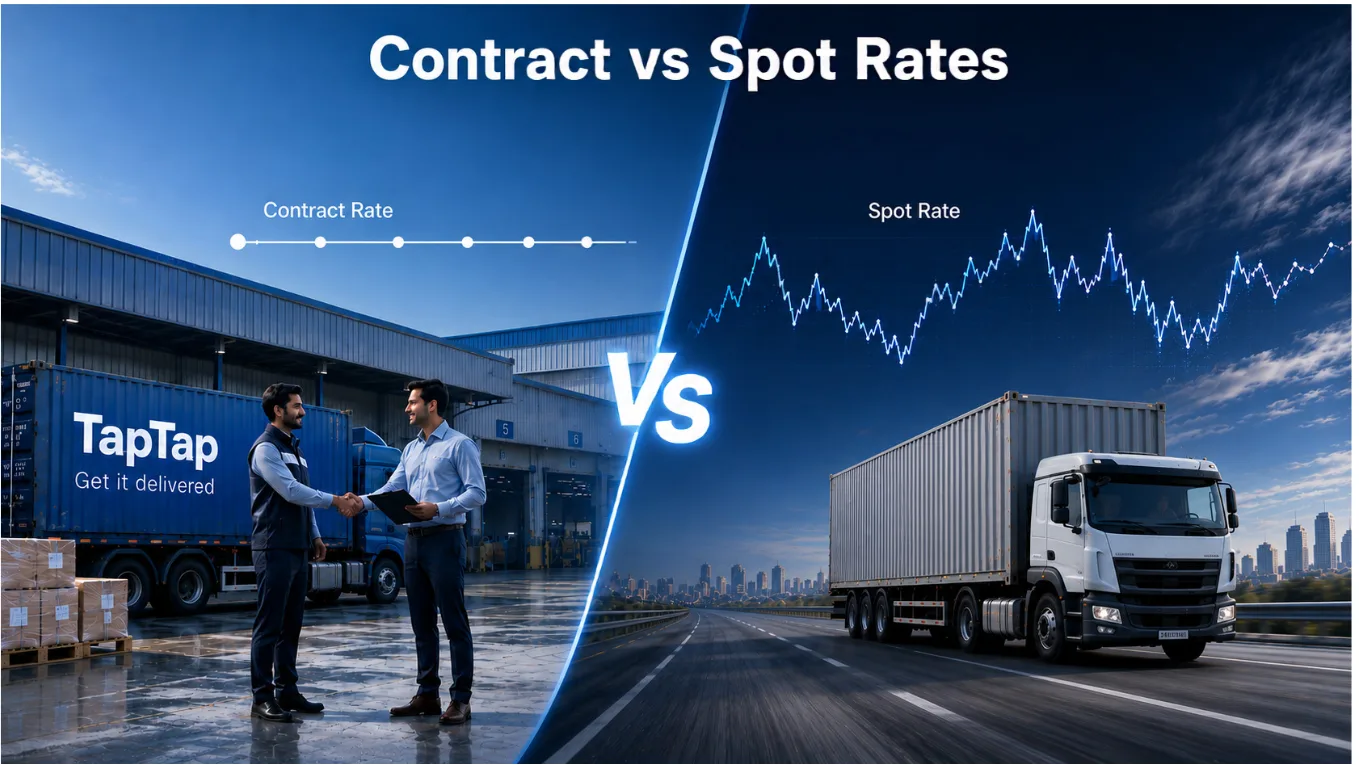
A contract rate is a price you and a carrier (or logistics platform) agree on in advance, typically for a period of three months to a year. Market swings do not affect it. You pay the agreed rate whether freight demand is high or low.
- Best for: shipping the same or similar routes regularly
- The benefit: predictable costs, and a truck waiting for you even when everyone else is scrambling during a busy season
Spot rates are the opposite. They are priced in real time based on how many trucks are available versus how much freight needs to move right now. Book today and you pay today's market price, whatever that happens to be.
- Best for: a one-time shipment, something urgent, or a route you have not used before
- The benefit: no commitment, and real savings if you happen to book during a slow stretch
Neither model is better than the other. It really comes down to timing — and that is where most shippers either save a lot of money or lose it.
Timing the Market: When Spot Rates Actually Help You
Spot pricing shifts with truck availability, fuel costs, seasonal demand, and regional events you might not even think about. A few key windows to know:
- The slowdown after peak season — after major shopping periods (post-festive is a classic example) freight demand drops and trucks become easier, and cheaper, to book
- Mid-week bookings — Tuesday through Thursday is usually cheaper than the Monday or Friday rush, when everyone is trying to move freight at once
- Backhaul opportunities — if a truck is already heading back empty on your route, carriers will often cut the price just to avoid running that leg with nothing in it
- Occasional low-volume shipping — if you are not shipping often there is no reason to lock into a contract; spot rates let you book only when you actually need it
The flip side: spot prices can spike quickly during festive periods, harvest season, or sudden fuel price rises. So timing matters a great deal.
When It Is Better to Lock In a Contract
If your shipping schedule is fairly regular, a contract rate protects you from all that volatility. It is usually worth considering when:
- You are running the same route every week or every month
- Your business has known peaks — Diwali, year-end sales, whatever it is — where spot prices usually climb
- You need guaranteed capacity and cannot afford to be without a truck during a busy week
- You prefer one predictable number in your budget rather than a rate that changes every time you book
A simple rule that works well in practice: if you are booking three or four full truck loads a month on the same route, a contract almost always pays off in the long run.
Choosing the Right Rate for Your Business
If you are a small business, your best choice is usually a mix. Use contract rates for your predictable shipping routes and spot bookings for the occasional extra or a sudden jump in orders.
If you are an e-commerce seller, your shipping volume probably follows your sales calendar — flash sales, holiday spikes, the usual. Lock in contract rates before your big sale periods (when everyone else is paying spot prices at the last minute) and use spot bookings during the slower rest of the year.
If you are an individual sender moving household goods or making one large personal delivery, spot rates are almost always the right call. There is no freight volume to justify a contract, so booking a full truck load as needed through a reliable platform makes much more sense.
Five Ways to Time Your Bookings Better
- Understand your seasonal trends — know when your demand rises and lock in contracts before that period, not during it
- Book mid-week whenever you can; it is a habit that quietly saves money over the year
- Watch fuel prices — diesel costs influence spot rates more than people realise, and a small drop is often a good moment to book
- Do not put all your freight on one pricing model; a mix of contract and spot gives you stability without losing flexibility
- Review your rates often — market conditions change, and a contract that made sense six months ago might not be your best deal today. A good logistics partner will tell you that honestly
How TapTap Fits Into This
Timing the market well is not something you can do blind. You need real-time rate visibility, a strong carrier network, and trucks that are actually available when you need them.
That is the gap TapTap fills. We work with businesses of all sizes — from someone sending a single large shipment to e-commerce sellers moving freight every week — helping them book full truck load services with clear pricing, verified carriers, and the option to choose between spot and contract rates depending on what fits. Whether it is a one-time booking or a regular route, the goal is to match you with the right truck at the right price without the guesswork.
Putting It All Together
There is no single right way to book FTL transport. It depends on how often you ship, how much flexibility you can afford, and how much risk you are willing to take. Frequent shippers usually benefit from the security of contract rates. Occasional or urgent shippers often save more by timing spot bookings well.
The real advantage comes from understanding both models instead of defaulting to whichever one you used before. Once you start paying attention to demand patterns and mixing your approach, booking a full truck load stops being a gamble and becomes a decision you can plan for.
Ready to book your shipment? Explore full truck load transport service options with TapTap and find the rate that actually works for your route. Moving smaller volumes? Part load transport may be the better fit.
Also Read
Previous: Why India's Growing E-commerce Brands Depend on Part Load Transport Service for Expansion.
Ready to modernize?
Move your transport business to TapTap
Manage fleets, automate dispatch, track shipments live, and grow faster — all from one platform built for Indian logistics.