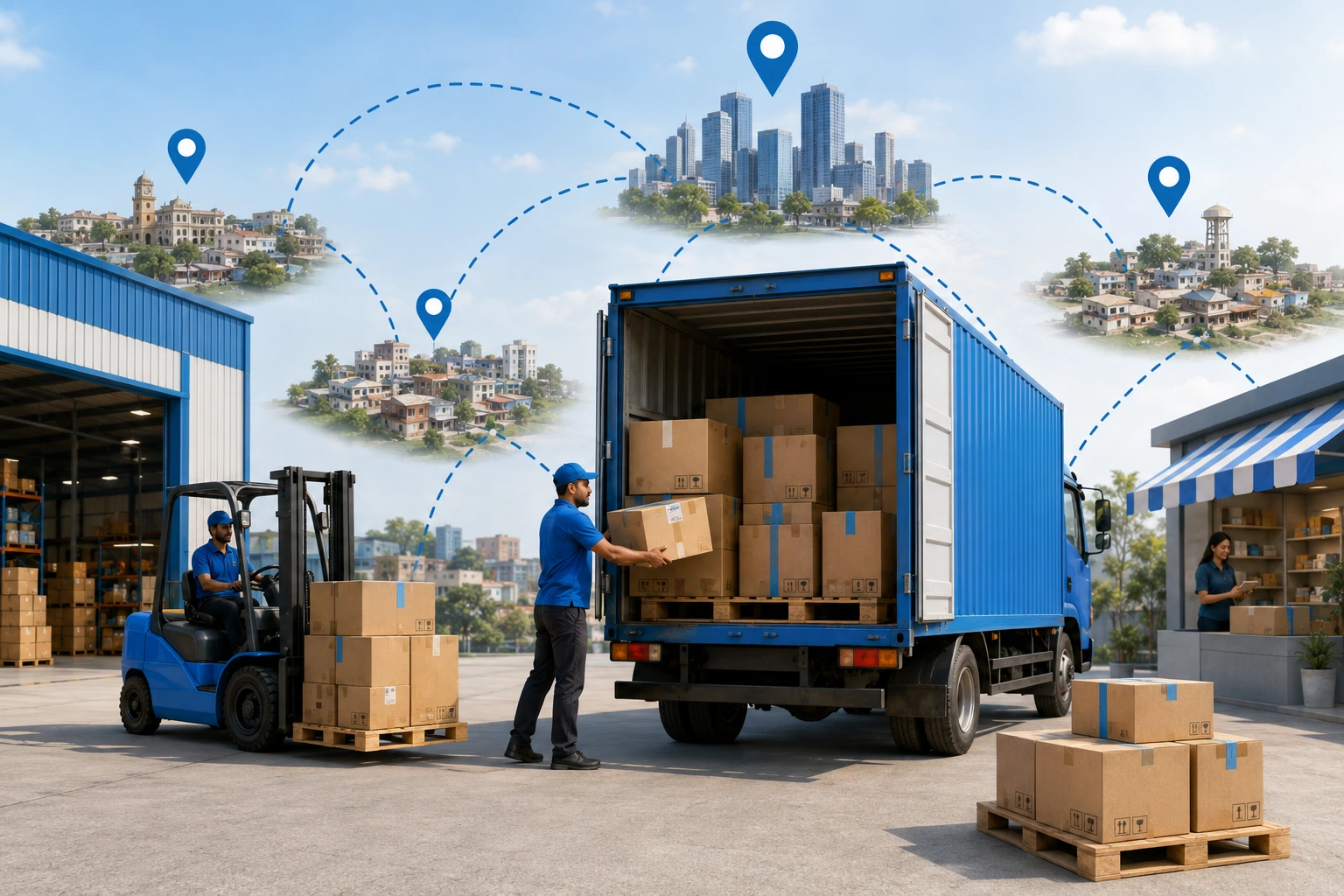
The Indian e-commerce industry is expanding at an unprecedented pace. One logistics strategy that has gained significant traction among growing brands is the [part load transport service](/service/partLoad) model — instead of waiting to fill an entire truck, businesses share transportation capacity with other shipments, enabling faster movement of goods while optimizing logistics costs.
From emerging D2C brands and regional marketplaces to established online retailers, businesses are reaching customers across cities, towns, and rural areas. As competition intensifies, efficient logistics has become a critical factor in sustaining growth and customer satisfaction. For e-commerce brands focused on scaling operations without increasing transportation expenses, part load shipping has become an essential component of supply chain success.
The Growth of E-commerce in India and Its Logistics Challenges
India's digital economy continues to create new opportunities for online sellers. Consumers now expect fast deliveries, real-time tracking, affordable shipping, and seamless order fulfillment regardless of location. However, this rapid growth brings several logistics challenges:
- Increasing delivery volumes
- Expansion into Tier 2 and Tier 3 cities
- Rising fuel and transportation costs
- Pressure to reduce delivery timelines
- Inventory movement between warehouses
- Seasonal demand fluctuations
What Is a Part Load Transport Service?
A part load transport service allows multiple shippers to share space within a single truck. Each shipper pays only for the portion of truck capacity used, making transportation more economical compared to booking a dedicated vehicle. This model is particularly beneficial when shipment volumes are too large for parcel services but not sufficient to justify a full truckload.
Part load transportation bridges the gap between courier services and dedicated trucking solutions, offering businesses a practical and scalable logistics option.
Why E-commerce Brands Prefer Part Load Transport Service
For growing e-commerce companies, transportation costs directly impact profitability. Booking a dedicated truck for smaller shipments often results in underutilized vehicle capacity. A part load transport service eliminates this inefficiency by allowing businesses to pay only for the space they use. Key cost advantages include:
- Reduced transportation expenses
- Lower operational overhead
- Better logistics budget management
- Improved profit margins
Faster Market Expansion
E-commerce brands aiming to enter new regions often face logistical constraints — establishing full-scale distribution operations in every city is expensive and time-consuming. With part load transport, businesses can test new markets with smaller inventory volumes, deliver products to multiple locations efficiently, and expand without significant upfront logistics investments. This flexibility enables brands to scale operations strategically while minimizing risks.
Improved Inventory Management
Instead of maintaining excessive stock levels at individual warehouses, businesses can use less than truckload logistics to move inventory more frequently between fulfillment centers. The result: reduced warehousing costs, better stock availability, lower inventory carrying costs, and faster replenishment cycles — letting brands maintain lean inventories while keeping products available to customers.
Supporting Omnichannel Fulfillment
Today's consumers purchase products through e-commerce websites, online marketplaces, mobile applications, social commerce platforms, and physical retail outlets. Managing inventory across these channels requires frequent stock transfers. A reliable part load transport service supports omnichannel operations by facilitating regular movement of goods between warehouses, fulfillment centers, and retail locations without requiring full truckloads.
Better Reach into Tier 2 and Tier 3 Markets
India's next wave of e-commerce growth is coming from smaller cities and semi-urban regions, which often experience lower shipment volumes, diverse delivery requirements, and geographically dispersed customers. Using part load transport, e-commerce brands can serve these regions efficiently without incurring the high costs associated with dedicated transportation — establishing a presence in emerging markets while maintaining operational efficiency.
Flexibility During Seasonal Demand Surges
E-commerce demand is rarely consistent throughout the year. Peak periods such as Diwali, festive seasons, end-of-season sales, flash sales, and new product launches often generate sudden spikes in shipment volumes. A part load transport service provides the flexibility to scale transportation capacity according to shipment requirements without committing to dedicated fleet resources — particularly valuable for growing brands experiencing unpredictable sales growth.
Why Transporters and Fleet Owners Benefit Too
The advantages of part load transport extend beyond e-commerce brands. Transporters and fleet owners also gain significant benefits:
- Higher vehicle utilization — combining shipments maximizes capacity and revenue per trip
- Reduced empty miles through optimized load planning
- Improved operational efficiency with digital route, load, and schedule management
- An increased customer base, reducing dependency on a few clients
The Role of Technology in Modern Part Load Logistics
Technology has transformed how part load transport service providers operate. Advanced logistics solutions now offer real-time tracking so businesses can monitor shipments end to end, route optimization that reduces transit times and fuel consumption, automated load matching that connects available truck space with shipment demand, and data-driven decision making that optimizes planning and performance. These innovations make less than truckload logistics more reliable, transparent, and efficient than ever before.
Key Factors When Choosing a Part Load Transport Provider
Not all logistics partners deliver the same level of service. Evaluate providers on the factors that most affect supply chain performance and customer experience:
- Network coverage for reliable nationwide deliveries
- Technology capabilities — tracking, shipment visibility, and digital documentation
- Delivery performance with consistent transit times
- Safety standards and secure handling to reduce damage
- Scalability to support future business growth
Conclusion
India's booming e-commerce sector demands logistics solutions that balance cost, flexibility, and scalability. A part load transport service has emerged as a powerful enabler of growth by helping businesses move goods efficiently without the expense of dedicated trucking — supporting inventory management, omnichannel fulfillment, market expansion, and supply chain agility for e-commerce brands, SME shippers, logistics managers, and fleet owners alike.
As competition increases and customer expectations rise, businesses that embrace less than truckload logistics will be better positioned to expand their reach and optimize costs. Start with TapTap's part load transport service, or move bigger volumes with full truck load.
Also Read
Ready to modernize?
Move your transport business to TapTap
Manage fleets, automate dispatch, track shipments live, and grow faster — all from one platform built for Indian logistics.