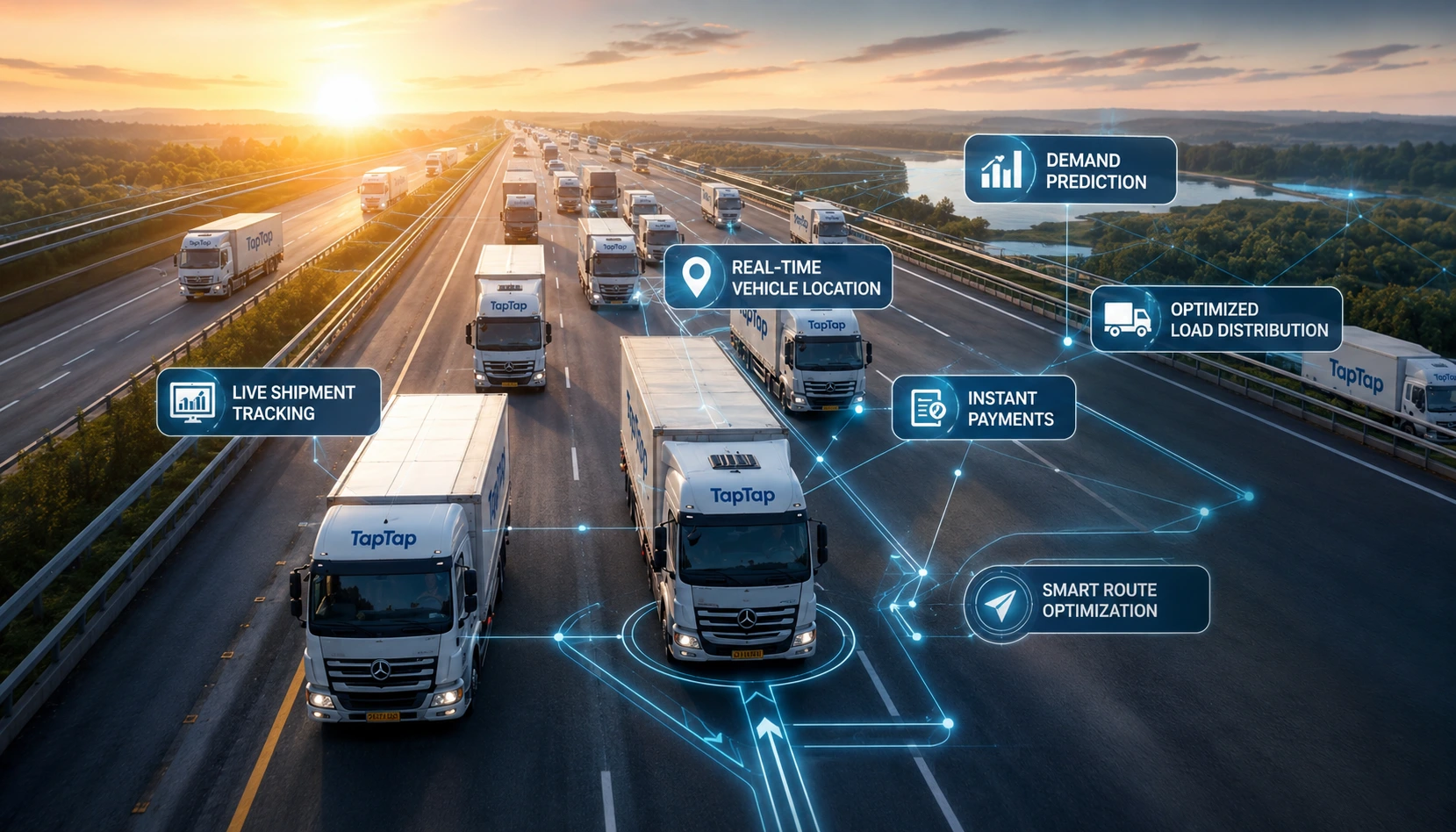
Empty trucks rolling back down the highway. Fuel burning. Driver hours ticking. Revenue: zero. Empty return trips, or "deadhead miles," are one of the biggest profit drains in [transport services India](/service/fullLoad) has grappled with for decades. But here's the good news: technology is rewriting the rules. Fast.
If you're part of the Indian logistics ecosystem — whether you're an SMB shipper, a fleet owner, or an area logistics manager — you already know this pain too well. Empty return trips are one of the biggest profit drains the industry has faced for decades. The traditional answer was simple: hustle harder, make more calls, rely on local contacts. That's no longer enough in a competitive, digitally-driven market.
The Hidden Cost of Empty Return Trips in Indian Logistics
Before diving into the solutions, let's put numbers to the problem. Industry estimates suggest that 25–40% of all truck kilometers traveled in India are empty. For a country with over 15 million trucks and a freight market worth ₹8+ lakh crore, that's a staggering waste — in fuel, time, and money.
For fleet owners and transporters, deadhead trips mean:
- Lost revenue on every return kilometer
- Higher per-trip costs that erode margins
- Driver fatigue from longer, economically unproductive routes
- Increased carbon emissions, making sustainability goals harder to achieve
How Technology Is Transforming Transport Services in India
India's logistics sector is undergoing its most significant upgrade in history. From startups to India's largest transport companies, everyone is betting big on technology to solve the deadhead problem. Here's how it's happening.
1. AI-Powered Load Matching Platforms
Think of this as the "Ola/Uber moment" for freight. AI-driven load matching connects shippers with available trucks in real time. Instead of a truck returning empty from Delhi to Mumbai, the platform automatically identifies a load going in the same direction and matches it to the driver — often before the previous delivery is even complete.
Key benefits:
- Drastically reduces empty return kilometers
- Maximizes asset utilization for fleet owners
- Gives SMB shippers access to pre-vetted, price-competitive carriers
- Reduces dependence on traditional brokers and middlemen
For growing Indian entrepreneurs who run small fleets, this technology is a genuine equalizer — putting them on the same playing field as far larger operators. Fleet owners can list capacity and find return loads on the TapTap transport company platform.
2. GPS and Telematics for Smarter Fleet Visibility
You can't optimize what you can't see. Modern GPS and telematics systems give fleet managers real-time visibility into where every vehicle is, how it's being driven, and when it will be available. When dispatchers know a truck is completing delivery in Pune at 3 PM, they can pre-book a return load from Pune before the truck even arrives.
Telematics systems also track:
- Fuel consumption per trip
- Driver behavior and fatigue patterns
- Idle time and route deviations
- Vehicle health and maintenance needs
For channel partners and city CEOs managing regional operations, this data transforms guesswork into precise, informed decision-making. Explore how TapTap's fleet management tools put this visibility in your hands.
3. Dynamic Route Optimization Software
Route planning used to mean a map and a phone call. Not anymore. Advanced route optimization software analyzes hundreds of variables — traffic patterns, toll costs, delivery windows, vehicle capacity, and return load availability — to design routes that minimize empty kilometers from the start.
The best transport company in India today isn't just the one with the most trucks. It's the one whose trucks spend the least time moving without cargo. Route optimization tools help by:
- Clustering deliveries geographically to reduce backtracking
- Identifying return-load corridors on high-frequency routes
- Adjusting routes dynamically based on real-time traffic and weather
- Reducing total kilometers driven, cutting fuel costs significantly
4. Digital Freight Exchanges and Load Boards
India's digital freight exchanges are maturing rapidly — and they're a game-changer for reducing deadhead miles. Digital freight boards allow transporters to post available truck capacity and let shippers bid for it in real time, creating a transparent, efficient marketplace where supply and demand meet instantly.
For e-commerce shippers handling return logistics — a notoriously complex problem — these exchanges offer a structured way to consolidate return shipments and avoid sending half-empty vehicles back to fulfillment centers. Benefits include:
- Price transparency — shippers get fair rates, transporters get fair margins
- Faster booking cycles — from hours to minutes
- Broader network reach — access trucks beyond your existing vendor list
- A clear data trail — every transaction is documented, simplifying GST compliance and audits
5. Predictive Analytics for Demand Forecasting
The smartest players in Indian logistics are now using predictive analytics to stay two steps ahead. By analyzing historical shipping data, seasonal demand patterns, and regional economic activity, AI models can predict freight demand spikes in specific corridors weeks in advance. This allows transporters to pre-position their fleets and line up return loads before a truck even sets off on its outbound journey.
For area logistics managers overseeing large regional networks, predictive analytics translates into:
- Fewer last-minute scrambles for return loads
- Better driver scheduling and reduced overtime costs
- Lower fuel expenditure through proactive route planning
- Stronger relationships with shippers who value reliability
6. IoT-Enabled Cargo Monitoring for Trust and Transparency
One often-overlooked reason for empty return trips is trust deficit. Many shippers are hesitant to book unknown trucks for valuable return cargo without visibility into cargo conditions. IoT-enabled sensors solve this elegantly. Temperature monitors, shock sensors, seal-integrity alerts, and cargo weight sensors give shippers real-time confidence that their goods are safe. When trust goes up, willingness to book return loads goes up — directly reducing empty trips.
This is especially relevant for:
- Pharmaceutical and FMCG shippers requiring cold-chain compliance
- E-commerce players managing high-value reverse logistics
- Agricultural supply chains where spoilage risk is high
The Business Case: What Reducing Empty Trips Actually Means
Let's make this tangible. Assume a fleet owner runs 20 trucks, each covering 4,000 km per month. If 30% of those kilometers are currently empty, that's 24,000 deadhead km monthly. At ₹12 per km in fuel and operational costs, that's ₹2.88 lakh wasted every month — or nearly ₹35 lakh per year.
Cutting empty trips by even 50% through technology adoption saves ₹17+ lakh annually. That's not a technology cost — that's an investment with a very clear return.
Getting Started: A Practical Roadmap for SMBs and Fleet Owners
Not every business can afford an enterprise logistics suite on day one. Here's a pragmatic approach you can follow step by step:
- Start with visibility — install basic GPS telematics; you can't improve what you can't measure
- Join a load-matching platform — accept return loads even at slightly lower margins, because utilization beats idling
- Analyze your routes — identify delivery clusters and return-load opportunities you're currently missing
- Invest in driver communication — a driver with a smartphone and a simple app can access load boards and flag capacity
- Scale with data — look at which routes consistently generate empty returns and build shipper relationships there
Conclusion: Connected, Intelligent, and Efficient
Empty return trips are not an inevitability. They're an inefficiency — and one that technology is steadily erasing. Whether you're an SMB shipper looking for cost-effective freight partners, a fleet owner trying to protect margins, or a logistics manager responsible for regional performance, the tools to eliminate deadhead miles are already here.
Transport services India is at an inflection point — and the operators who embrace technology today will define the industry's next decade. The road ahead is long. Make sure your trucks don't travel it empty. Get started with TapTap's part load and full truck load services built to keep your fleet earning in both directions.
Also Read
Previous: How Technology is Changing the Future of Every Indian Transport Company.
Ready to modernize?
Move your transport business to TapTap
Manage fleets, automate dispatch, track shipments live, and grow faster — all from one platform built for Indian logistics.